Blog Details
- Home
- Blog Details


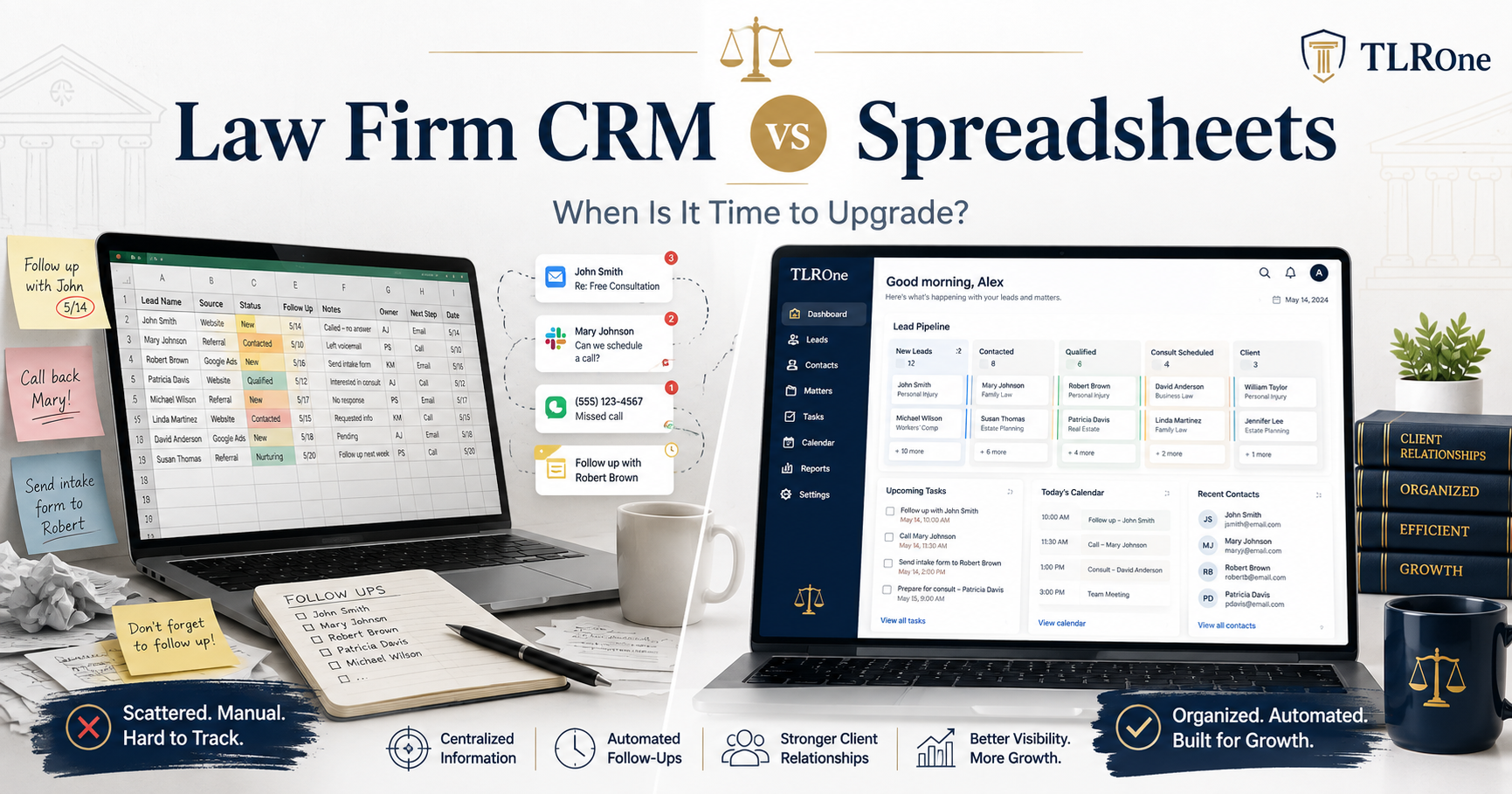
Many law firms begin with simple systems. A spreadsheet records new enquiries, emails hold client conversations and team members track their own follow-ups. That can work while the number of leads is manageable.
Problems begin as the firm grows. More enquiries arrive, more people need the same information and follow-ups become harder to track. At that point, moving from spreadsheets to CRM management software is less about adding technology and more about creating a clearer client process.
A spreadsheet can be useful for recording names, contact details, enquiry sources and basic status updates. It is familiar and easy to start. For a small team with a limited number of enquiries, that may be enough.
The weakness appears when the spreadsheet becomes the centre of a larger workflow. One person may update a lead while another keeps separate notes in email or WhatsApp. A follow-up date can be entered without anyone being clearly responsible for it. The firm may have data but still lack a reliable picture of what is happening.
A law firm does not lose an opportunity simply because a name is missing from a list. More often, the next action is unclear. A prospective client may have spoken to the firm, promised to send documents or asked to be contacted later. If that follow-up depends on someone remembering it, the process is fragile.
Good lead management tools create a more disciplined system around those next steps. Enquiries can be assigned, stages can be tracked and pending actions can remain visible. This gives the team a shared view of active opportunities instead of relying on separate notes or personal reminders.
As a firm expands, client information often passes between reception, business development, lawyers, finance and management. When each team works from a different source, gaps become more likely. A client may repeat information, a colleague may not know what was discussed earlier or a manager may struggle to understand the current status.
This is where the best client management software adds value. It gives the firm a structured place to keep lead and client activity together, making handovers easier and improving visibility. CRM tools for customer service are particularly useful when several people need to understand the history of a client conversation before taking the next step.
Spreadsheets can show how many enquiries have been entered, but management usually needs more context. Which leads are active? Which are waiting for a response? Who is responsible? Which opportunities have stalled? Where are enquiries coming from?
CRM management software can make these questions easier to answer by organising activity around a defined pipeline. The purpose is not to produce more reports. It is to make the information useful enough for managers to spot gaps and understand where attention is needed.
There is no fixed number of clients or employees that makes a CRM necessary. The better test is whether the current process is becoming difficult to control. Missed follow-ups, duplicate records, unclear lead ownership, inconsistent updates and time spent reconciling trackers are signs that the system may no longer fit the way the firm works.
The move should not simply replace a spreadsheet with a more complicated tool. Before changing systems, the firm should map how an enquiry moves from first contact to consultation, engagement and ongoing client communication. The CRM should support that process rather than force the team into unnecessary steps.
TLROne is built around the revenue workflow of service businesses and professional firms. TLR CRM organises leads, client records, follow-ups and sales activity in one structured system. The wider TLROne platform also includes TLR Leads for business enquiry generation and TLR DebtXpert for overdue payment tracking.
For law firms that have reached the limits of spreadsheets, the value lies in bringing more of the client process into a single, visible workflow. A product demonstration can then show whether TLROne matches the firm's current process, team structure and growth plans.
It can be enough for a small and simple process. As enquiry volume and team involvement increase, spreadsheets can become harder to manage consistently.
A CRM gives the team a structured view of enquiries, follow-ups, client activity and responsibility, making the process easier to track.
Yes. They can make pending actions and lead ownership more visible, reducing reliance on individual memory.
It should support clear client records, lead tracking, follow-up management, useful reporting and a workflow the team can use consistently.
Yes. They can give team members a clearer view of previous client interactions and make internal handovers easier.
The firm should compare its current lead and client process with the functions available in TLROne and use a demonstration to assess how well the platform fits its workflow.